

GIFT IFSC
NEWSLETTER
JUNE 2026
Highlights
- Master Circular for recognised Stock Exchanges & recognised Clearing Corporations
- IFSCA Amends AML/KYC Exemption Framework for Certain Entities and Activities
- IFSCA Sets Compliance Deadline for IBUs and Restricts New Customer Onboarding
- Reporting format and norms for Annual Compliance Audit for CMIs in IFSC
- Advisory on Heightened Cyber Security Risks arising from Frontier AI Model
- IFSCA Amends SNRR Account Rules to Facilitate INR Transactions for IFSC Units
- IFSCA proposes unique KYC ID for seamless use of GIFT City entities
- IFSCA FinTech Sandbox Framework 2026 FAQs
- IFSCA Eases Qualified Jeweller Eligibility to Promote Jewellery Exports through IIBX
- Groww, Zerodha, Angel One, Upstox get GIFT City nod for international investing

Master Circular for recognised Stock Exchanges & recognised Clearing Corporations
- The IFSCA, vide Master Circular dated 5 June 2026, has consolidated the regulatory framework applicable to recognised Stock Exchanges and Clearing Corporations operating in IFSCs.
- The Master Circular seeks to simplify regulatory compliance, improve ease of doing business, and strengthen the IFSC market infrastructure ecosystem by bringing the applicable directions, guidelines, and operational requirements into a single consolidated document.
- It supersedes 15 earlier IFSCA circulars issued between 2021 and 2025 on matters including governance, liquidity enhancement schemes, disaster recovery, direct market access, co-location facilities, settlement guarantee funds, and the code of conduct for MIIs. It also supersedes all SEBI circulars issued before 1 October 2020 relating to Stock Exchanges and Clearing Corporations in IFSCs.
- However, actions already taken under the superseded circulars will continue to remain valid. The Master Circular came into force with immediate effect and requires MIIs, Broker Dealers, Clearing Members, and Depositories to comply with the consolidated framework.

IFSCA Amends AML/KYC Exemption Framework for Certain Entities and Activities
- The IFSCA, vide Circular dated 19 June 2026, amended its earlier circular dated 18 November 2024 concerning exemptions from the applicability of the IFSCA Anti-Money Laundering, Counter-Terrorist Financing and Know Your Customer Guidelines, 2022.
- Under the revised provision, all Financial Institutions, including those exempted from the AML/KYC Guidelines, must ensure that monetary consideration arising from business transactions including funds, fees, and other payments is routed only through an account maintained with an IFSC Banking Unit (“IBU”) or a Special Non-Resident Rupee (“SNRR”) Account.
- The amendment introduces a prescribed channel for business-related fund flows while retaining the existing AML/KYC exemptions granted under the earlier circular.
- All other provisions of the exemption circular remain unchanged. The circular came into force with immediate effect, requiring affected Financial Institutions to align their transaction-routing arrangements accordingly.

IFSCA Sets Compliance Deadline for IBUs and Restricts New Customer Onboarding
- The IFSCA vide Circular dated 30 June 2026, amended the framework governing internet banking services provided by IFSC Banking Units (“IBUs”). The amendment revises the compliance timeline prescribed under the earlier circular titled “Internet Banking Services to Clients of IBUs – Review” dated 29 December 2025 and provides certain operational clarifications.
- Under the revised requirements, IBUs that commenced operations before the issuance of the circular must achieve compliance by 31 July 2026. Any IBU remaining non-compliant after this date will be required to stop onboarding new customers, with effect from 1 August 2026, for the liability products in respect of which non-compliance continues.
- The circular also clarifies that the term “all linked accounts” covers all accounts maintained by a customer, including deposit and loan accounts. Further, “whitelisting” refers to a facility that allows customers to maintain a predefined list of approved beneficiaries.
- IFSCA has also made the requirement prescribed under paragraph 8.i.b. of the earlier circular non-mandatory. All other provisions of the existing internet banking framework remain unchanged.

Reporting format and norms for Annual Compliance Audit for CMIs in IFSC
- The International Financial Services Centres Authority (IFSCA) has issued a circular dated June 5, 2026, prescribing a standardized reporting format and compliance norms for the Annual Compliance Audit of Capital Market Intermediaries (CMIs) operating in IFSCs.
- Under the IFSCA (Capital Market Intermediaries) Regulations, 2025, every CMI is required to submit an Annual Compliance Audit Report (“ACAR”) together with an Annual Compliance Audit Checklist (“ACAC”) to IFSCA by 30 September each year for the immediately preceding financial year. Broker Dealers, Clearing Members, and Depository Participants must also submit these reports to their respective MIIs.
- The circular introduces structured checklists covering both general and category-specific compliance requirements, including audit obligations applicable to Global Access Providers and Introducing Brokers.
- It also requires the audit to be conducted by an independent, peer-reviewed professional, restricts the auditor’s tenure to three consecutive years followed by a two-year cooling-off period, and requires MIIs to submit consolidated annual compliance information to IFSCA.

Advisory on Heightened Cyber Security Risks arising from Frontier AI Model
- The IFSCA, vide Circular dated 4 June 2026, issued an advisory to all regulated entities (“REs”) operating in IFSCs on the heightened cyber security risks associated with frontier Artificial Intelligence (“AI”) models.
- The advisory highlights that advanced AI models are capable of rapidly identifying vulnerabilities, generating exploits, and substantially shortening the time gap between the disclosure and exploitation of security weaknesses. Accordingly, IFSCA has advised REs to strengthen their cyber security frameworks and include frontier AI-related risks in their cyber risk assessments.
- The recommended measures include maintaining updated Software Bills of Materials (“SBOMs”), strengthening multi-factor authentication, prioritising the timely patching of critical vulnerabilities, maintaining comprehensive inventories of APIs, enhancing monitoring systems to detect AI-enabled cyberattacks, and establishing rapid response protocols for credential compromise.
- The advisory requires REs to oversee third-party service providers, apply safeguards when using AI-assisted security tools, adopt proportionate controls, and ensure human review of AI-generated code and remediation measures.

IFSCA Amends SNRR Account Rules to Facilitate INR Transactions for IFSC Units
- The IFSCA has amended the framework governing permissible transactions through Special Non-Resident Rupee (“SNRR”) accounts of IFSC units by substituting Clause 3 of its earlier circular dated 29 January 2025. The amendment follows corresponding changes to the circular granting exemptions to specified entities and activities from the applicability of the IFSCA (AML, CFT, and KYC) Guidelines, 2022.
- Under the revised framework, a financial institution operating in an IFSC may receive or undertake monetary transactions arising from its business activities outside the IFSC through an SNRR account maintained with an authorised dealer in India outside the IFSC.
- However, such amounts must be remitted to the financial institution’s account maintained with an IFSC Banking Unit (“IBU”) in a specified foreign currency within 30 working days from the date of receipt.
- This remittance requirement does not apply to amounts credited to the SNRR account for meeting administrative expenses. The circular came into force with immediate effect.

IFSCA proposes unique KYC ID for seamless use of GIFT City entities
- The IFSCA has proposed measures to streamline know your customer (KYC) processes, including assigning a unique identification number to each client that can be used across regulated entities in GIFT-IFSC.
- According to a consultation paper issued on June 26, KYC Registration Agencies (KRAs) will generate this unique code for every client in their database. The identifier will allow clients to use their verified KYC credentials for onboarding and availing services with multiple regulated entities, removing duplication in the process.
- Under the framework, entities will be required to integrate with at least one KRA for uploading, storing, retrieving, and updating KYC records of clients. Regulated entities must complete integration within two months of the circular’s issuance.
- All new clients onboarded on or after September 1, 2026, must have their KYC details uploaded to the KRA system. For clients onboarded prior to this date, entities will be required to upload KYC records by October 30, 2026.
- However, the mandate will not be applicable on certain activities or entities which are exempted under the IFSCA (Anti Money Laundering, Counter-Terrorist Financing and Know Your Customer) Guidelines, 2022.

IFSCA FinTech Sandbox Framework 2026 FAQs
- IFSCA has issued FAQs on the IFSCA FinTech Sandbox Framework, 2026 to provide clarity on the operation of its revised sandbox regime, which came into effect from March 16, 2026. The new Framework replaces the earlier sandbox-related frameworks while protecting actions already taken under the previous regulatory framework.
- The Framework provides for four sandbox mechanisms: the FinTech Regulatory Sandbox, FinTech Innovation Sandbox, Inter-Operable Regulatory Sandbox, and Overseas Regulatory Referral Mechanism / FinTech Bridge. Eligible Indian and foreign entities may apply through a two-stage application process on the SWIT portal. Applications will be assessed on key parameters such as innovation, user benefit, need for live testing, risk management, consumer protection, and feasibility of deployment.
- The testing period is limited to 12 months, with a possible extension of up to six months. The Framework also sets out disclosure obligations, reporting requirements, financial conditions, exit procedures, and grounds for revocation.
- Overall, it enables FinTech entities to test innovative financial products, services, and business models in a controlled environment, with regulatory relaxations where considered appropriate.
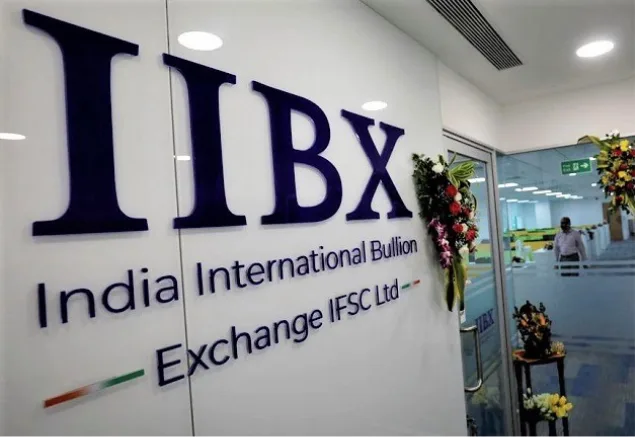
IFSCA Eases Qualified Jeweller Eligibility to Promote Jewellery Exports through IIBX
- The IFSCA, vide Circular dated 15 June 2026, amended the framework for the import of gold and silver through the India International Bullion Exchange (“IIBX”) by Qualified Jewellers and eligible India–UAE CEPA Tariff Rate Quota (“TRQ”) holders.
- The amendments seek to improve transparency and facilitate access to bullion for jewellery exports by easing the eligibility requirements for Special Economic Zone (“SEZ”) units and expanding the category of entities eligible to obtain Qualified Jeweller status.
- Significantly, the minimum net worth requirement applicable to eligible SEZ units has been removed. Further, entities holding a valid Registration-cum-Membership Certificate (“RCMC”) issued by the Gem & Jewellery Export Promotion Council (“GJEPC”) may now apply for recognition as Qualified Jewellers.
- The Circular also aligns the IIBX framework with recent Directorate General of Foreign Trade (“DGFT”) notifications restricting imports under specified silver ITC(HS) codes and introduces corresponding compliance requirements, thereby promoting trade facilitation while maintaining appropriate regulatory oversight.

Groww, Zerodha, Angel One, Upstox get GIFT City nod for international investing
- Leading Indian fintechs Groww, Zerodha, Angel One, and Upstox have secured licenses from IFSCA to offer international equity investing to Indian retail traders. Groww and Upstox obtained Global Access Provider (GAP) licenses, while Zerodha and Angel One became broker-dealers, enabling direct or indirect access to US stock markets.
- The expansion of global investing services comes amid growing investor interest in overseas markets, including increased attention around major technology and AI-related public offerings.
- The platforms may require approximately two to three months to complete the necessary technology integration, testing and regulatory compliance before launching the services.
- GIFT City introduced the Global Access Provider (“GAP”) registration framework in August, providing investors with a regulated and cost-efficient route to access international markets, including zero withdrawal charges for remitting funds back to India.
About Us

- We are a One-Stop solution offering a wide range of corporate business services to entities operating out of GIFT City IFSC and across India.
- Our customized solutions range from business set-up, accounting, audit support, tax advisory, legal advisory, secretarial, ROC compliance, SEZ compliance, IFSCA compliance support services and other business auxiliary services.
- We are registered with IFSCA as an ancillary service provider at GIFT CITY-IFSCA.
- We harness our market-leading expertise to help your vision become a thriving reality.
OUR VISION
To work closely with clients to embrace a transformational approach aimed at benefiting all stakeholders-empowering organizations to grow, build sustainable competitive advantage, and drive positive societal impact.
OUR MISSION
To provide our client cost effective solution in time bound manner and offer them peace of mind by providing tailor made solutions as per their requirement. We achieve this by standing out from the crowd and being innovative, proactive, and true to our core values while delivering the highest possible quality in everything we do.