What is GIFT City? A Complete Guide for Businesses (2026)
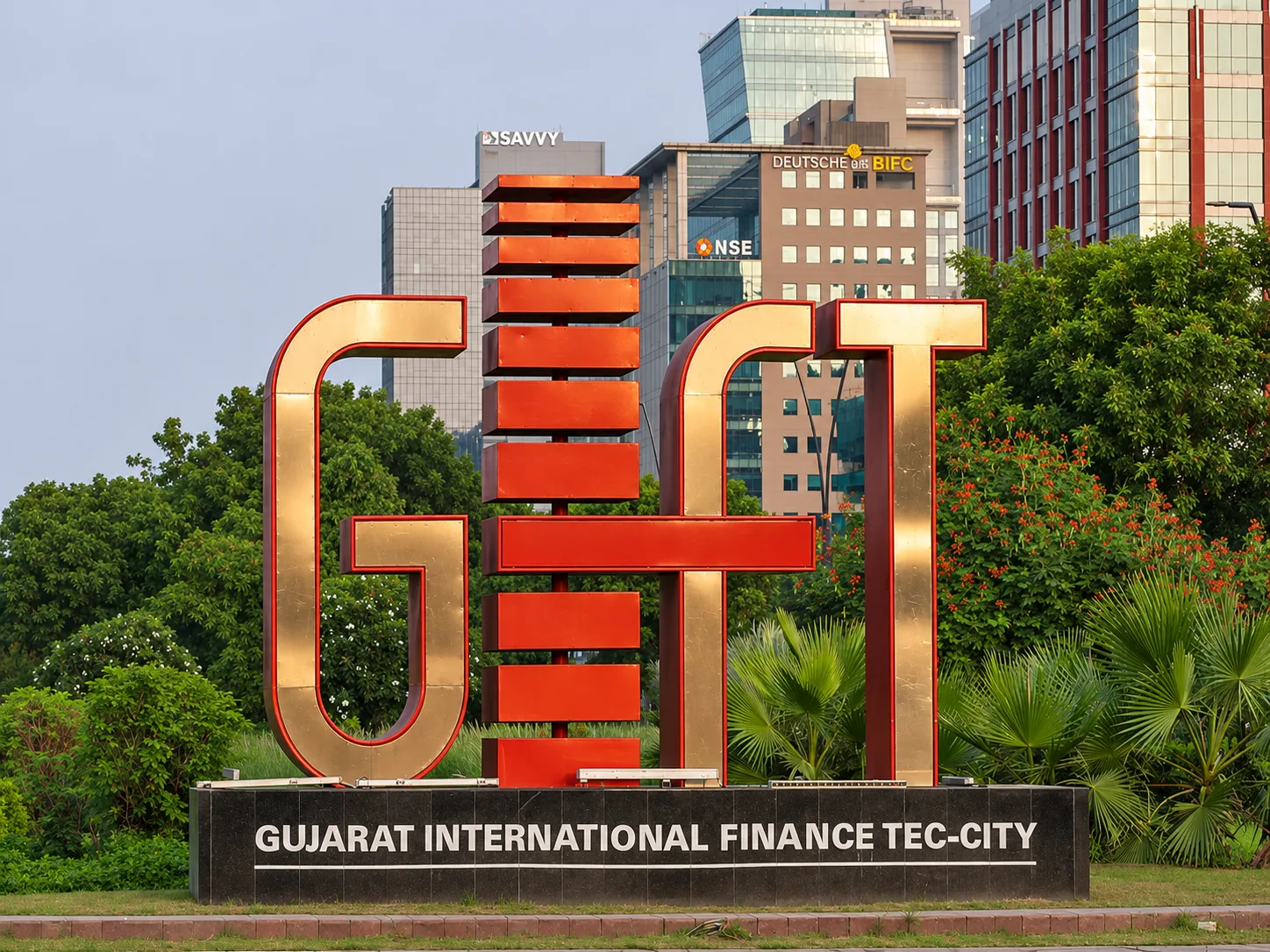
1. What is GIFT City?
- Gujarat International Finance Tec-City (GIFT City) is India’s first operational smart city and International Financial Services Centre (IFSC) developed over 886 acres with world-class infrastructure and a future-ready ecosystem. It was conceptualized as part of a broader initiative to develop Gujarat into a global hub for financial and technological services. It is a planned smart city on the banks of the Sabarmati river between Ahmedabad and Gandhinagar, Gujarat, developed by the Government of Gujarat. It is home to India’s first International Financial Services Centre (IFSC), where businesses can serve global clients in foreign currency while operating from Indian soil.
- GIFT City focuses on a wide range of business areas such as offshore banking, capital markets, asset management, insurance (both domestic and international), and professional services like law, accounting, and consulting. It also encourages IT and ITeS companies, including Business Process Outsourcing (BPOs) and Knowledge Process Outsourcing (KPOs), to set up operations, making it a hub for both finance and technology.
- The project is being developed by the Government of Gujarat through its agencies—Gujarat Urban Development Company Limited (GUDCL), Gujarat Maritime Board (GMB), and Gujarat Industrial Development Corporation (GIDC). These agencies work under the main company called Gujarat International Finance Tec-City Company Limited (GIFTCL), which is responsible for planning and implementing the city’s infrastructure and business ecosystem.
- For investors and businesses, GIFT City offers excellent opportunities in both commercial and residential projects. The city has two main zones — the Domestic Tariff Area (DTA) and the Special Economic Zone (SEZ). The SEZ includes the International Financial Services Centre (IFSC), where global financial institutions, fintech firms, and investment companies can operate with special tax and regulatory benefits.
2. GIFT City at a glance
| Particulars | Details |
| --- | --- |
| Full form | Gujarat International Finance Tec-City |
| Location | Gandhinagar, Gujarat (on the Sabarmati, between Ahmedabad and Gandhinagar) |
| Developer | Gujarat International Finance Tec-City Company Limited (Government of Gujarat) |
| Total area | ~886 acres |
| Multi-services SEZ | ~261 acres (houses the IFSC and IT/ITeS units) |
| Domestic Tariff Area | ~625 acres |
| IFSC operational since | 2015 |
| Regulator | International Financial Services Centres Authority (IFSCA), set up under the IFSCA Act, 2019; operational since 2020 |
| Currency of operations (IFSC) | Freely convertible foreign currency (USD, EUR, GBP etc.) |
3. GIFT City vs GIFT IFSC: what the difference is
- GIFT City is the whole smart city: offices, homes, hotels, the SEZ and the domestic area. GIFT IFSC is the part of GIFT City’s multi-services SEZ that has been notified as an International Financial Services Centre for carrying out financial services in foreign currency.
- GIFT IFSC financial institutions and other authorised entities are subject to the applicable IFSCA framework. Not every unit in the SEZ is an IFSC financial institution. Eligibility for FEMA treatment and tax incentives depends on the relevant law and the entity’s approved activity. Businesses in the DTA generally follow domestic rules.
4. The two zones: SEZ (IFSC) and Domestic Tariff Area (DTA)
- Multi-services SEZ (~261 acres): Houses the IFSC and IT/ITeS units. The IFSC is meant for international financial services such as banking, fund management, insurance, capital markets, aircraft and ship leasing, treasury centres and FinTech. It runs under IFSCA’s specialised framework, in foreign currency. IT/ITeS units in the SEZ are governed by the SEZ policy framework.
- Domestic Tariff Area (~625 acres): For businesses serving the Indian market in rupees: IT and back-office companies, domestic financial firms, residential, retail and hospitality. India’s normal domestic tax and regulatory rules apply.
5. Who regulates GIFT City? The role of IFSCA
The International Financial Services Centres Authority (IFSCA) was set up under the IFSCA Act, 2019 and has been operational since 2020, with its headquarters in GIFT City, Gandhinagar. It is the single, unified regulator for financial products, services and institutions in the IFSC. Within the IFSC it exercises the powers that RBI, SEBI, IRDAI and PFRDA exercise in the domestic market. IFSCA:
- facilitates applications for registrations and licences through its Single Window IT System (SWIT), subject to the applicable regulatory framework;
- through the Office of Administrator (IFSCA), administers SEZ unit approvals for IFSC units, including Letters of Approval following the applicable Unit Approval Committee process;
- issues the regulations for each business line, for example the Fund Management Regulations 2025, Capital Market Intermediaries Regulations 2025, TechFin and Ancillary Services Regulations 2025 and the Finance Company Regulations;
- supervises entities on fit-and-proper norms, AML/CFT, IT and cyber security, reporting and conduct.
6. Who can set up in GIFT City?
Indian and foreign applicants may establish eligible IFSC operations in the legal form permitted for the relevant activity, such as a company, LLP, branch or other permitted structure. The main categories include:
- Banks: IFSC Banking Units and IFSC Banking Companies of Indian and foreign banks
- Fund managers: Fund Management Entities running venture capital, restricted and retail schemes, PMS and family investment funds, and acting as managers to REITs/InvITs
- Insurers and reinsurers: IFSC Insurance Offices, managing general agents and insurance intermediaries (brokers, corporate agents, surveyors, TPAs)
- Capital market intermediaries: broker-dealers, clearing members, depository participants, custodians, investment advisers, investment bankers, credit rating agencies, distributors and research entities
- Aircraft and ship leasing: operating and finance leases, sale-and-leaseback and asset management
- Treasury centres: Global/Regional Corporate Treasury Centres serving group entities
- Finance companies:lending, investments, factoring and other core and non-core financial activities
- FinTech and payments: FinTech entities (direct authorisation or sandbox) and payment service providers
- TechFin and ancillary services: technology, legal, accounting, compliance, secretarial and other professional services to IFSC units and non-residents
- Corporate support: Global In-house Centres and book-keeping, accounting, taxation and financial crime compliance (BATF) units
- Education: eligible foreign higher educational institutions operating international branch campuses or offshore education centres under the applicable IFSCA framework.
7. Key benefits of GIFT City
Tax benefits (income tax, GST, stamp duty)
The Income-tax Act, 2025 applies from 1 April 2026, subject to transitional provisions. The following benefits reflect the Act as amended by the Finance Act, 2026:
- 20-year tax holiday: 100% deduction of income specified in section 147(3) for 20 consecutive tax years selected within the 25-year period beginning with the tax year of registration of the eligible IFSC unit (section 147(2)).
- After the holiday: Eligible income referred to in section 147(3) is subject to the 15% concessional rate in accordance with the Income-tax Act, 2025 as amended by the Finance Act, 2026. Applicable surcharge and cess must be considered separately. Other income is taxed under the relevant provisions.
- MAT/AMT: Section 206 provides a 9% minimum alternate tax rate for an eligible IFSC company, and a 9% alternate minimum tax rate for an eligible non-company unit, where income is derived solely in convertible foreign exchange. Applicability depends on the taxpayer and tax regime; applicable surcharge and cess are additional.
- No TDS on notified payments: CBDT Notification of July 2026, and other applicable notifications, provide non-deduction of tax on specified payments to eligible IFSC units, subject to the notified conditions and prescribed declarations. This is not a general exemption from income tax or withholding.
- For non-resident investors and lenders: Specific exemptions or concessional rates may apply to qualifying interest, gains on specified securities traded on recognised IFSC exchanges and certain dividends from IFSC companies. Eligibility depends on the taxpayer, instrument, transaction, currency, statutory conditions and any applicable tax treaty. These benefits do not extend automatically to all payments or investments.
- GST: Under section 16 of the IGST Act, 2017, supplies to an SEZ unit or developer for authorised operations are zero-rated, subject to statutory requirements.
- Customs: Section 26 of the SEZ Act, 2005 provides duty exemptions for qualifying imports and eligible procurement for authorised operations, subject to the SEZ Rules, 2006 and prescribed procedures.
- Stamp duty: Specific instruments and eligible transactions may qualify for exemptions or concessions under applicable central or Gujarat law and notifications. Office leases, registration charges and other instruments must be reviewed separately; an IFSC address alone does not create a blanket exemption.
Foreign currency operations
Under regulations 3–5 of the FEMA (International Financial Services Centre) Regulations, 2015, recognised or permitted financial institutions and branches in IFSC are treated as persons resident outside India. Their business is conducted in currencies and with counterparties permitted by the relevant regulator; other FEMA regulations may apply where expressly provided or directed by RBI. Transactions involving Indian residents must comply with the applicable FEMA provisions. This treatment does not determine residence under income-tax or company law.
Single unified regulator
IFSCA provides unified financial-sector supervision and SWIT facilitates applications, including applicable SEZ approvals. Activity-specific approvals and conditions still apply; timelines depend on the completeness and complexity of the application.
Infrastructure and cost
- Grade A offices, walk-to-work housing, district cooling, automated waste collection and high-speed telecom, with metro connectivity to Ahmedabad
- Modern commercial infrastructure and potential operating-cost advantages, depending on location, staffing and business model.
- Company law: Certain specified IFSC private and unlisted public companies may qualify for modifications or exemptions under notifications issued under section 462 of the Companies Act, 2013. CSR, board meetings, auditor rotation and other requirements must be assessed against the applicable notification and eligibility conditions.
8. Is it good to invest in GIFT City? Options for Indians (LRS) and NRIs
Resident Indians: Resident individuals may remit up to USD 250,000 per financial year under LRS, in aggregate for permissible purposes. RBI A.P. (DIR Series) Circular No. 15 of 10 July 2024 permits eligible IFSC financial services/products and permissible overseas transactions through a foreign currency account (FCA) in an IFSC, subject to the LRS framework. Options may include:
- Foreign currency deposits with IFSC Banking Units
- IFSC-based outbound funds and retail schemes for global equity and debt exposure
- Direct investment in foreign stocks, ETFs, bonds and mutual funds through authorised Global Access Providers
- Paying for overseas education, travel, insurance or medical treatment from the IFSC account
The FCA cannot be used for domestic transactions with other residents. ODI and OPI into or through IFSC are governed by the FEMA (Overseas Investment) Rules, Regulations and Directions, 2022. Resident individuals and Indian entities must meet the activity-specific conditions. The general financial commitment ceiling for eligible Indian entities is 400% of net worth, subject to prescribed exceptions, limits and approvals; it is not unconditional permission to invest.
NRIs and foreign investors: LRS applies to resident individuals, not persons resident outside India. NRIs, OCIs and foreign investors may access permitted products subject to investor eligibility, KYC, tax residence and applicable investment regulations, for example:
- IFSC funds, including eligible restricted schemes, retail schemes and exchange-traded funds, subject to the relevant fund rules
- Family investment funds for wealth consolidation and succession planning
- Foreign-currency life insurance from IFSC Insurance Offices
- Foreign currency deposits with IBUs (interest on eligible deposits may be tax-exempt)
- GIFT Nifty and other products on the IFSC exchanges
9. How to set up in GIFT City: step by step
- Feasibility and structuring: Identify the permitted activity, regulatory category, legal form, minimum capital, staffing and compliance requirements. Prepare a business plan and seek preliminary regulatory clarification where necessary.
- Office premises: Identify compliant premises with an approved developer or co-developer. Obtain a provisional allotment or other premises evidence where required under the applicable SEZ and IFSCA requirements.
- Applications and approvals: Apply through SWIT for the applicable IFSCA authorisation and SEZ Letter of Approval, as applicable. Submit the activity-specific checklist and supporting documents. SEZ scrutiny and regulatory in-principle approval may proceed separately; the Administrator issues the SEZ LOA following the applicable unit approval process.
- Post-approval documentation: Fulfil the conditions of the LOA and regulatory approval, including premises documentation, applicable bank accounts, bond-cum-legal undertaking (BLUT), and applicable GST, IEC, RCMC or other registrations. Requirements vary by activity and entity structure.
- Final authorisation and commencement: Establish the required systems, personnel, capital and controls; satisfy the conditions for final regulatory authorisation where applicable; and submit the prescribed SEZ and IFSCA commencement intimations and supporting evidence applicable to the activity.
10. How ADI helps
ADI (Aadidaivam International Private Limited) is an IFSCA-registered TechFin and Ancillary Service Provider based in GIFT City. We assist Indian and businesses with regulatory structuring, SWIT filings, incorporation, SEZ approvals and ongoing compliance.
11. Frequently asked questions
What is the full form of GIFT City?
Gujarat International Finance Tec-City.
Where is GIFT City located?
In Gandhinagar, Gujarat, on the banks of the Sabarmati river between Ahmedabad and Gandhinagar, with road and metro connectivity to Ahmedabad.
Is GIFT City an SEZ?
Partly. About 261 acres of GIFT City is a notified multi-services SEZ, which houses the IFSC and IT/ITeS units. The remaining ~625 acres is a Domestic Tariff Area, which is not an SEZ.
Who is eligible to set up in GIFT City?
Indian and foreign applicants may establish an IFSC unit for an activity permitted under the applicable IFSCA framework, subject to eligibility and authorisation. Domestic-market businesses may establish operations in the DTA under applicable domestic laws.
What are the tax benefits of GIFT City?
Eligible IFSC units may claim a 100% deduction of specified income for 20 consecutive tax years out of 25 under section 147, with a 15% rate on qualifying income after the deduction period. The 9% MAT/AMT rate, withholding relief, zero-rated GST supplies for authorised SEZ operations and customs or transaction-specific concessions apply only when their respective statutory conditions are satisfied.
For guidance on your specific situation, speak to our team.
← All insights